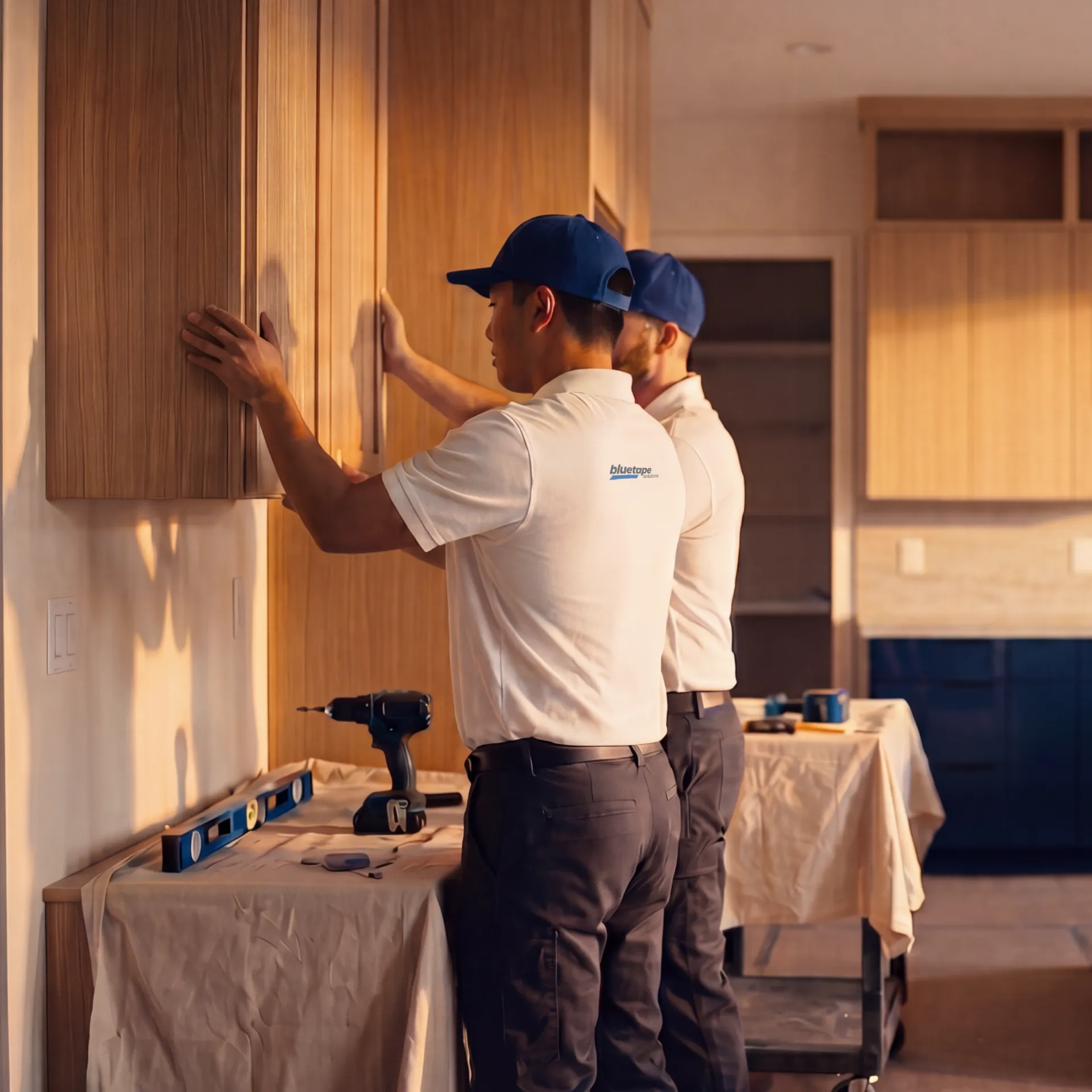
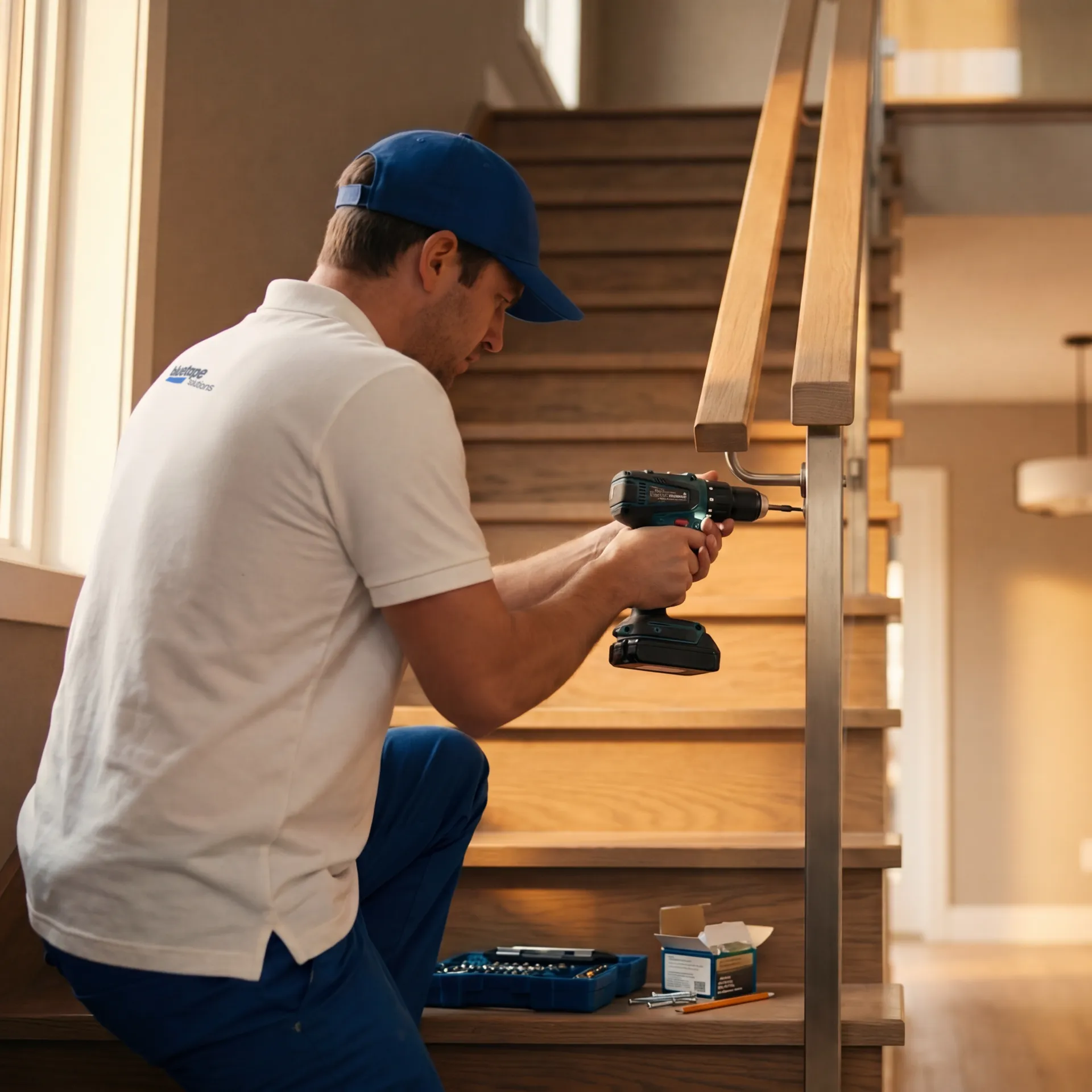
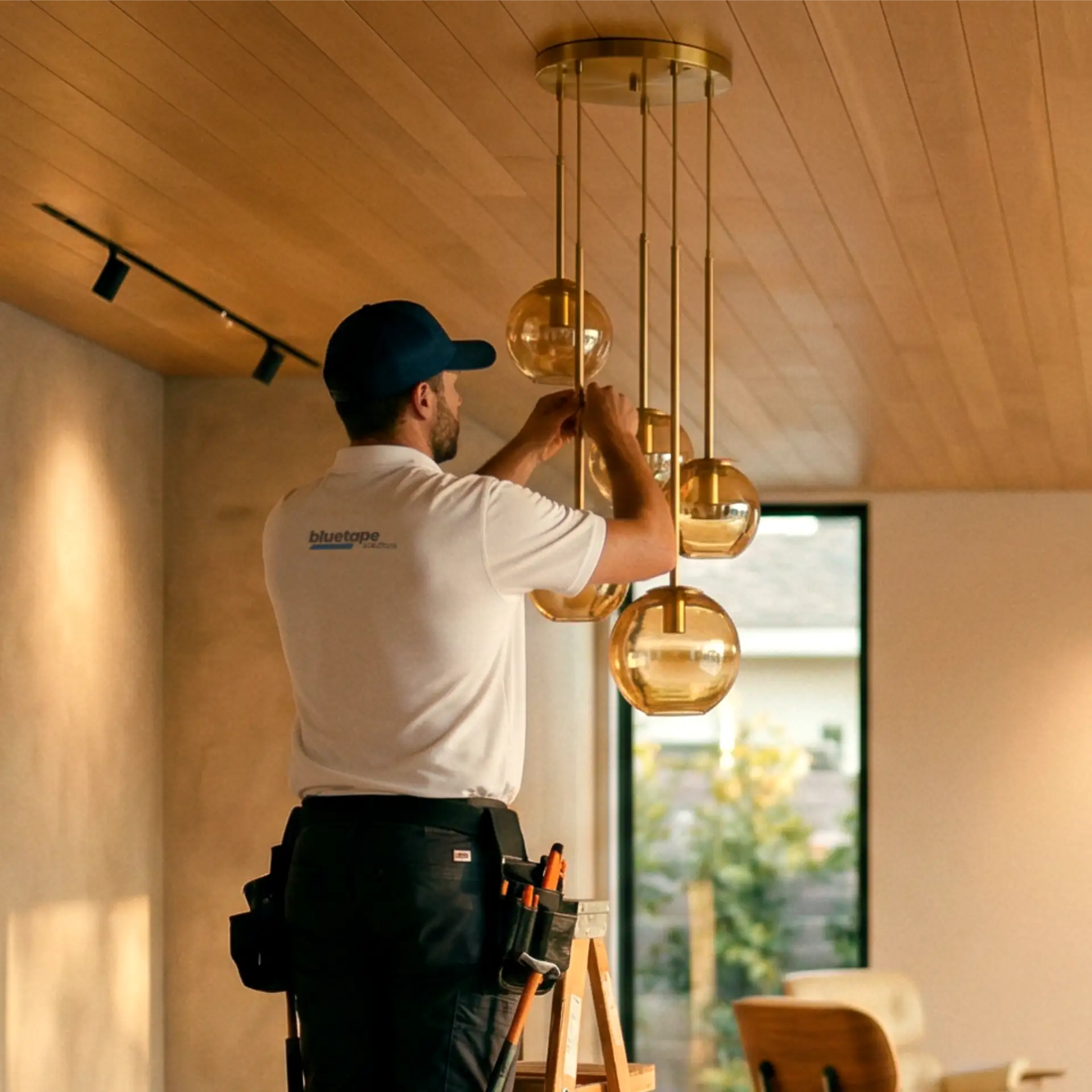






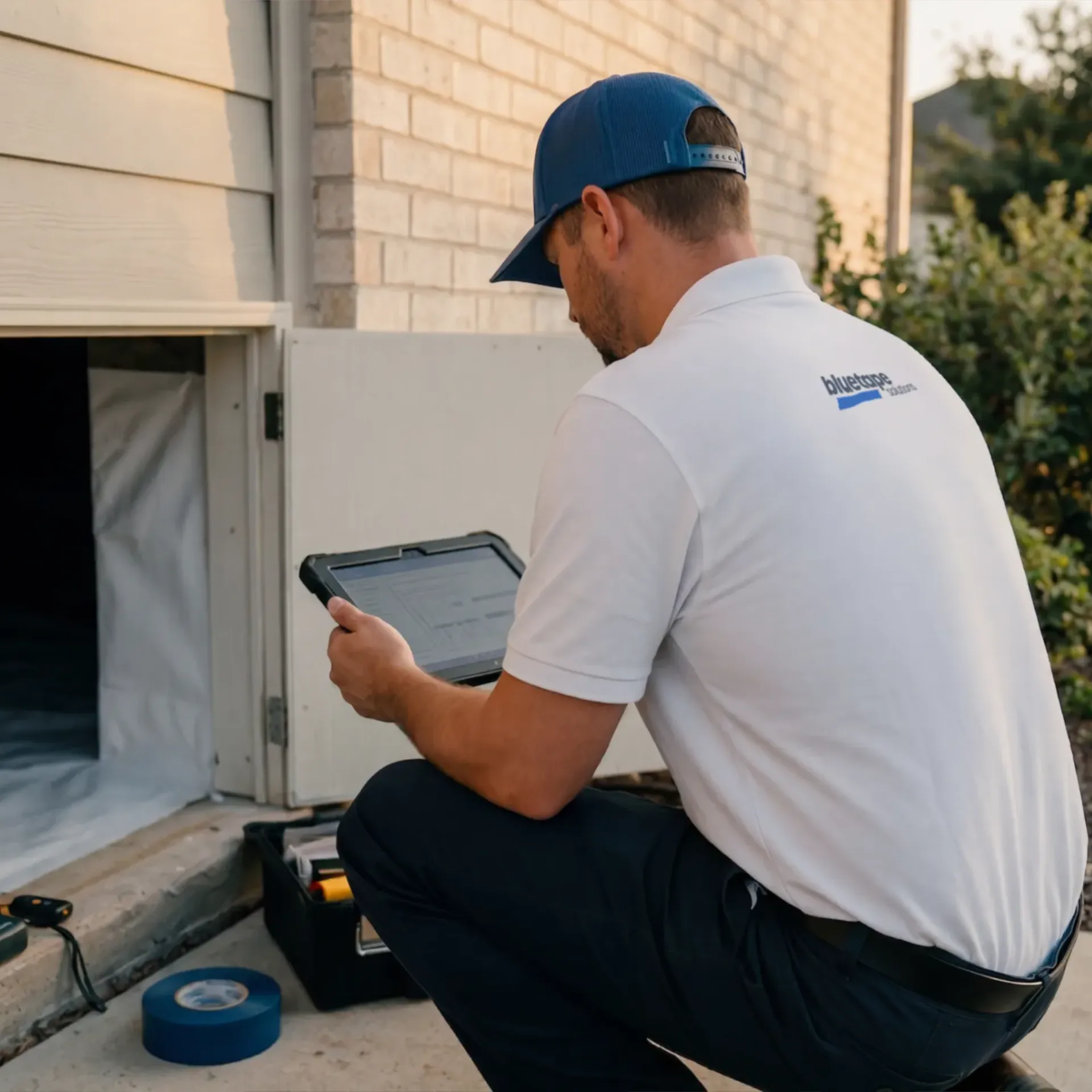

The most visible part of a repair project is usually the technician at the property.
They repair the drywall, replace the faulty outlet, address the plumbing leak, repair the wood rot or complete the flooring work. But by the time a Bluetape technician arrives at the home, a significant amount of work has already happened behind the scenes.
That operational work becomes especially important when a property needs several different trades on a real estate timeline.
At Bluetape Solutions, we think of the repair itself as one part of a larger process. Estimating, project administration, scheduling, field execution, communication, and documentation all have to work together to move a repair scope from identification to completion.
Here is what that process looks like behind the scenes.
The repair project starts before a technician arrives
For inspection repairs, the process can begin with dozens of pages of information about a property. For pre-listing work, it may begin with a walkthrough and a collection of repairs and updates across several areas of the home.
Before anyone picks up a tool, those individual items need to become an executable scope.
That means identifying what work is required, determining which trades are appropriate, establishing pricing and understanding how the different repairs relate to one another.
A plumbing repair that requires opening a wall, for example, may create subsequent drywall and painting work. Exterior wood rot could require carpentry before the area can be properly finished.
The individual repairs aren't necessarily complicated. The coordination between them can be.
The scope becomes one project
Once the work is approved, the individual repair items need to move together.
This is where Bluetape's multi-trade consolidation model becomes important.
Instead of treating the electrical work, plumbing work, carpentry and painting as unrelated service calls, Bluetape brings them together under one project. The appropriate technicians still perform their respective scopes, but scheduling and sequencing can be coordinated across the entire repair list.
That distinction is particularly relevant to real estate.
A traditional contractor generally schedules around the availability of that contractor's business. A real estate repair project exists inside a transaction timeline. There may already be a target date for photography, listing, closing or move-in.
Bluetape was built around that reality: your timeline informs our timeline.
Someone has to connect the office and the field
Once a multi-trade project begins, there are naturally moving pieces.
Technicians need access to the property. Materials need to be available. One scope may need to be completed before another can begin. Questions may arise once work is underway.
That is why Bluetape assigns a Field Administrator as a single point of contact.
The Field Administrator helps connect what was approved on paper with what is happening at the property. Rather than requiring the client to independently track each technician or trade, the project has a central point for coordination and communication.
That structure is established before work begins. Bluetape's Project Kickoff Report identifies the project timeline, scope, budget, action items and point of contact so the work starts with a shared understanding of what comes next.
What happens in the field comes back into the project
Good project infrastructure also needs a way to handle what happens after work begins.
Homes can reveal unexpected conditions. A repair may uncover something that wasn't visible when the original scope was created. A material selection may change. Additional work may be requested.
Bluetape's process creates a structure for those moments.
Changes to the original scope can be documented through a defined change-order process, including changes to cost or schedule when applicable. The Project Kickoff Report also establishes expectations around communication, site access, and other project logistics before work begins.
The purpose isn't to suggest that a repair project will never encounter an unexpected condition.
It's to have a process for what happens when it does.
Multiple trades eventually become one completed project
The operational side of the work continues after the last technician leaves.
With several independent contractors, the end of a project can mean collecting invoices, photographs, receipts, and warranty information from several different sources.
Bluetape brings that information back together.
Multiple trades become one consolidated invoice, and completed projects receive a Project Completion Report that can include the final repair scope, invoice, photo documentation, and Bluetape's one-year workmanship warranty.
The same consolidation that happens in the field therefore carries through to the documentation.
The infrastructure behind the repair matters
A repair company will ultimately be judged by the quality of the work it performs. That remains fundamental.
But when a project involves multiple trades and a defined real estate timeline, craftsmanship is only one part of delivering the work successfully.
Someone also has to estimate it. Someone has to determine the appropriate resources. Someone has to schedule and sequence the work. Someone has to communicate progress, document changes, consolidate billing, and provide the final project record.
Those functions are easy to overlook because most of them happen before or behind the technician working in the home.
At Bluetape Solutions, they are intentionally part of the repair service.
The repairs happen in the field. The infrastructure behind them is what keeps the project moving.
That's what it means to provide one team for every part of the repair.