




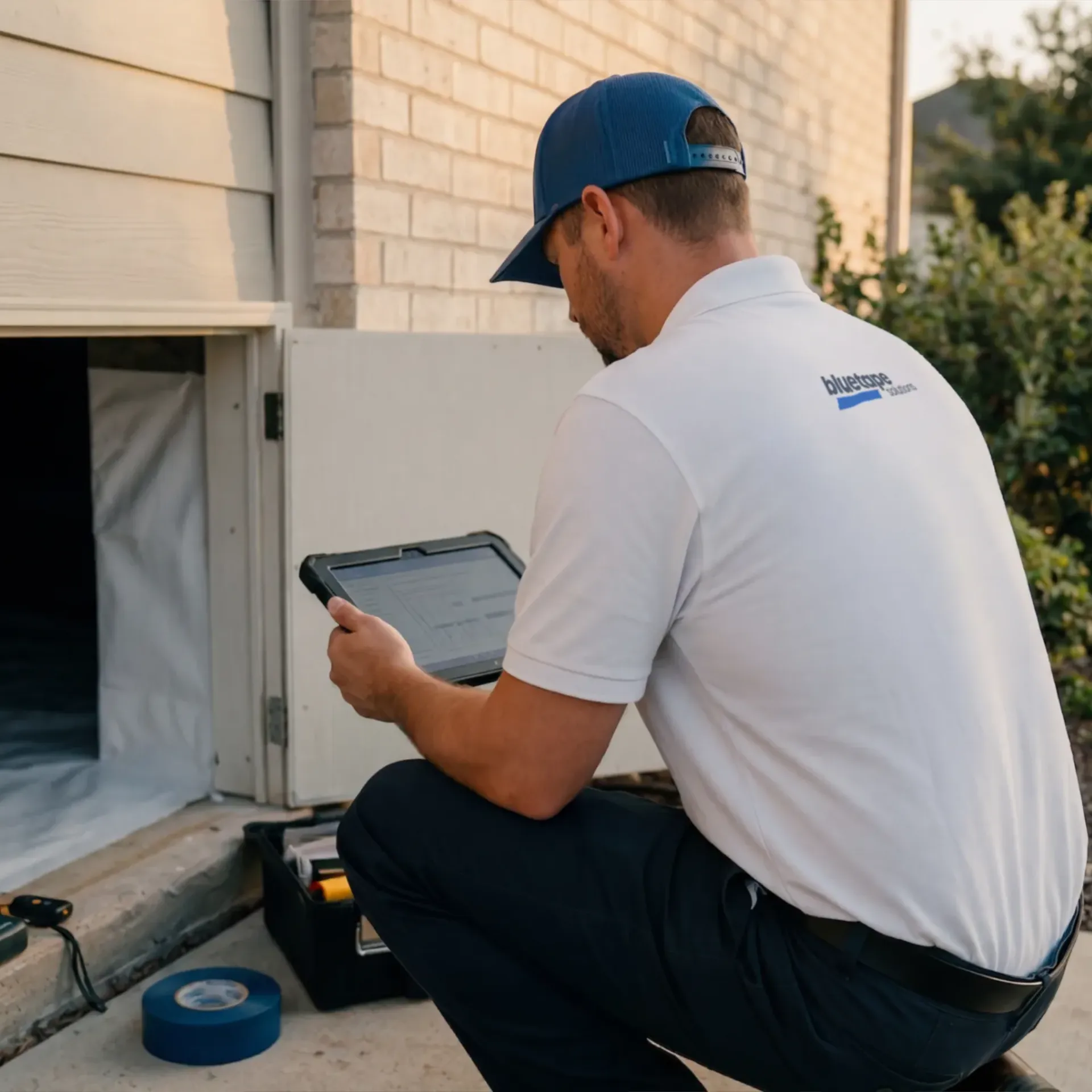

An inspection report doesn't separate itself according to contractor licensing requirements.
The same report can identify a leaking plumbing fixture, an electrical concern, damaged roofing, wood rot, an HVAC issue and several smaller repairs. From a project perspective, they may all be line items on the same repair list. Legally, however, they aren't necessarily treated the same.
Electrical, plumbing, HVAC and other specialized work are regulated trades, and contractor licensing requirements can also apply to broader home-improvement work depending on the state, project, and dollar amount.
For a real estate repair project involving multiple trades, licensed and insured isn't simply a nice credential to see on a contractor's website. It's part of determining who is actually qualified—and legally permitted—to perform the work.
An inspection report doesn't create the licensing requirement
There is an important distinction here.
A repair doesn't require a license because an inspector found it. It requires the appropriate license when state or local law regulates that type of work.
And the rules differ across Bluetape's service areas.
In Maryland, the Maryland Home Improvement Commission is particularly direct: performing home improvements without the required license is a criminal offense. Maryland also separately licenses professional trades including electrical, plumbing and HVACR work.
In Virginia, the Board for Contractors licenses businesses performing construction, repair and improvement work on property owned by others. The license class determines the monetary value of projects the contractor can undertake, while its classification or specialty determines the type of work it can perform. Virginia separately licenses individual tradespeople working in electrical, plumbing, HVAC and gas fitting.
In South Carolina, a current license or registration is required for residential building and specialty contracting as defined by state law. The state specifically licenses residential electrical, plumbing and HVAC contractors and registers specialty contractors for work including roofing, flooring, masonry, drywall, carpentry and painting.
And in Washington, D.C., the Department of Licensing and Consumer Protection states that home improvement contractors are legally required to carry the appropriate Home Improvement Contractor license. D.C. specifically identifies electrical updates, plumbing, HVAC and general repairs among home-improvement projects for which licensing requirements may apply.
So while not every loose doorknob or paint touch-up requires a licensed tradesperson, many of the repairs commonly found during an inspection do fall within regulated work.
Licensing tells you more than whether someone can make the repair
A license establishes a level of accountability beyond knowing how to perform a particular task.
Maryland, for example, requires home-improvement contractor applicants to pass an examination and demonstrate at least two years of relevant experience or education before applying for a license. South Carolina requires examinations for residential electrical, HVAC and plumbing contractor licenses, including both technical and business-law components.
That distinction matters on a multi-trade project.
Being capable of replacing an electrical component isn't the same as being properly credentialed to contract for and perform regulated electrical work. The same applies to plumbing, HVAC and other licensed scopes.
When several categories appear on one inspection report, the question becomes larger than “Can this company fix everything?”
It's also “Does this company have the appropriate credentials behind the work it's agreeing to perform?”
Insurance is the other half of the equation
Licensing and insurance are different protections, but they're often discussed together for good reason.
Maryland requires licensed home-improvement contractors to maintain at least $500,000 in general liability insurance under requirements effective since 2024. The state's consumer guidance also specifically recommends obtaining a contractor's current liability insurance certificate and, when applicable, workers' compensation documentation.
D.C. similarly requires Home Improvement Contractors to maintain liability insurance, and a current Certificate of Insurance must remain on file throughout the license period.
Insurance matters because repair work happens inside someone's home. People, property, tools and materials are all involved. Appropriate coverage provides a layer of protection when something unexpected happens; the exact protection depends on the policy and circumstances.
Multi-trade consolidation still requires the right trades
This becomes particularly relevant to Bluetape's model.
Multi-trade consolidation doesn't mean one handyman performs every item on an inspection report. It means Bluetape coordinates the appropriate resources for the different scopes under one repair project.
An inspection report might require electrical, plumbing, roofing and carpentry work. Those items can be consolidated into one Bluetape estimate, one coordinated project and one invoice—but the licensing requirements associated with the individual work don't disappear.
That's an important part of providing one team for every part of the repair.
Credentials reduce another variable in an already time-sensitive project
Real estate repairs already have enough variables: scope, cost, scheduling, materials, access and the transaction timeline.
Discovering after work has started that a contractor isn't appropriately licensed for a particular scope creates a variable no one needs.
State regulators themselves encourage consumers to verify credentials. Maryland tells consumers to confirm a contractor's license before hiring and provides a public license lookup; Virginia, South Carolina and D.C. likewise maintain licensing systems for contractors and regulated trades.
For Bluetape Solutions, licensing and insurance aren't intended to be impressive fine print at the bottom of an estimate. They're part of the infrastructure required to take responsibility for repair work across multiple trades.
One company can simplify a multi-trade repair project. But behind that one company still need to be the right people, the right credentials and the right protections for the work being performed.
For reference, agents or homeowners can review the official licensing information through the Maryland Department of Labor, Virginia DPOR, South Carolina LLR, and D.C. Department of Licensing and Consumer Protection.