


A completed repair project should come with more than a final invoice.
For Bluetape Solutions, project completion also includes documentation of the work and a one-year workmanship warranty. That warranty is included in the Project Completion Report, alongside the final project information and repair documentation, giving the homeowner a clear record of the work and the coverage that follows it.
For real estate repairs, that matters because the end of the project and the end of the transaction aren't necessarily the end of the story.
What is Bluetape's one-year workmanship warranty?
Bluetape's warranty covers our workmanship for one year from the date the project is completed. The Certificate of Warranty included in the Project Completion Report identifies the project, establishes the warranty period and documents the coverage provided with the completed work.
At its simplest, a workmanship warranty is a contractor standing behind the quality of its labor. It is distinct from a manufacturer's warranty on a product or material. If an issue covered by the workmanship warranty becomes apparent after the project is complete, there is an established company and documented warranty to return to.
That distinction can become important months after a repair is finished.
A repair may look complete on the day the technician leaves. But workmanship issues don't necessarily announce themselves immediately. Problems related to installation or execution can become apparent after the repaired area has been used, exposed to weather, or simply had time to perform under normal conditions.
The difference between completing the work and standing behind it
There is no universal requirement that every contractor provide the same written workmanship warranty. That makes warranty coverage something worth distinguishing from the repair itself.
Consumer-protection agencies regularly emphasize the importance of getting contractor warranties and guarantees in writing. The Georgia Attorney General's Consumer Protection Division recommends putting all guarantees, warranties and promises in writing, while the Ohio Attorney General recommends that home-improvement contracts clearly state any contractor guarantee or warranty.
There is a practical reason for that distinction.
Without documented coverage, a problem that surfaces later can reopen questions about responsibility: Was the issue related to workmanship? Who performed the original repair? Is the contractor responsible for returning? Was anything actually promised after completion?
A written warranty doesn't mean that every future problem with a home is covered. It establishes what the repair company is prepared to stand behind and for how long.
What happens when there is no workmanship warranty?
The value of a workmanship warranty becomes clearer when you consider the alternative. If a repair develops a workmanship-related problem after the project is complete and there is no written warranty, there may be no clearly defined period during which the contractor has agreed to stand behind the labor. The homeowner can still contact the contractor, but what happens next may depend on the original contract, applicable state law, and the contractor's willingness to return.
That is one reason consumer-protection agencies emphasize getting contractor commitments in writing. California's Contractors State License Board describes a written agreement as one of the most important communication tools between a contractor and homeowner because it establishes what was agreed upon and helps prevent later misunderstandings.
A workmanship warranty creates a defined period of accountability. If an issue covered by Bluetape's warranty appears during the one-year warranty period, the homeowner isn't starting from scratch with a new contractor and a new repair bill. There is an existing repair company, an established project record, and documented warranty coverage tied to the work that was completed.
Why one year is a meaningful period
There's also a better way to substantiate the one-year timeframe itself.
A one-year workmanship period isn't an arbitrary number unique to Bluetape. The FTC notes that warranties on new construction commonly provide one year of coverage for workmanship and materials on many components, including items such as siding, doors, trim, drywall, and paint. While a new-home builder warranty is different from Bluetape's repair warranty, it provides useful context for why a full year is a meaningful period for workmanship coverage.
A year allows completed work to move beyond the conditions present on installation day. Exterior repairs can experience changing seasons and weather. Doors, fixtures and other repaired components go through months of normal use. Painted and repaired surfaces have time to settle. If a problem attributable to the covered workmanship becomes apparent during Bluetape's warranty period, there is a documented path back to the company that performed the work.
That's the real value of the warranty: not a promise that nothing will ever go wrong with the home, but accountability for Bluetape's workmanship for a defined period after the project is complete.
Why the warranty belongs in the Project Completion Report
Bluetape doesn't treat warranty information as something a client has to remember from a conversation months earlier.
It becomes part of the project's final documentation.
The Bluetape Project Completion Report consolidates information about the completed work, including the final invoice, repair documentation, project photos and Certificate of Warranty. The example report includes before, during and after photography for individual repair items as well as the warranty certificate establishing the one-year coverage period.
That creates continuity.
The estimate establishes what Bluetape plans to do. The Project Kickoff Report organizes the work before it begins. The Project Completion Report documents what was completed. And the warranty establishes Bluetape's commitment to its workmanship after the technicians leave.
One company to call after the project is complete
The warranty also complements Bluetape's multi-trade model.
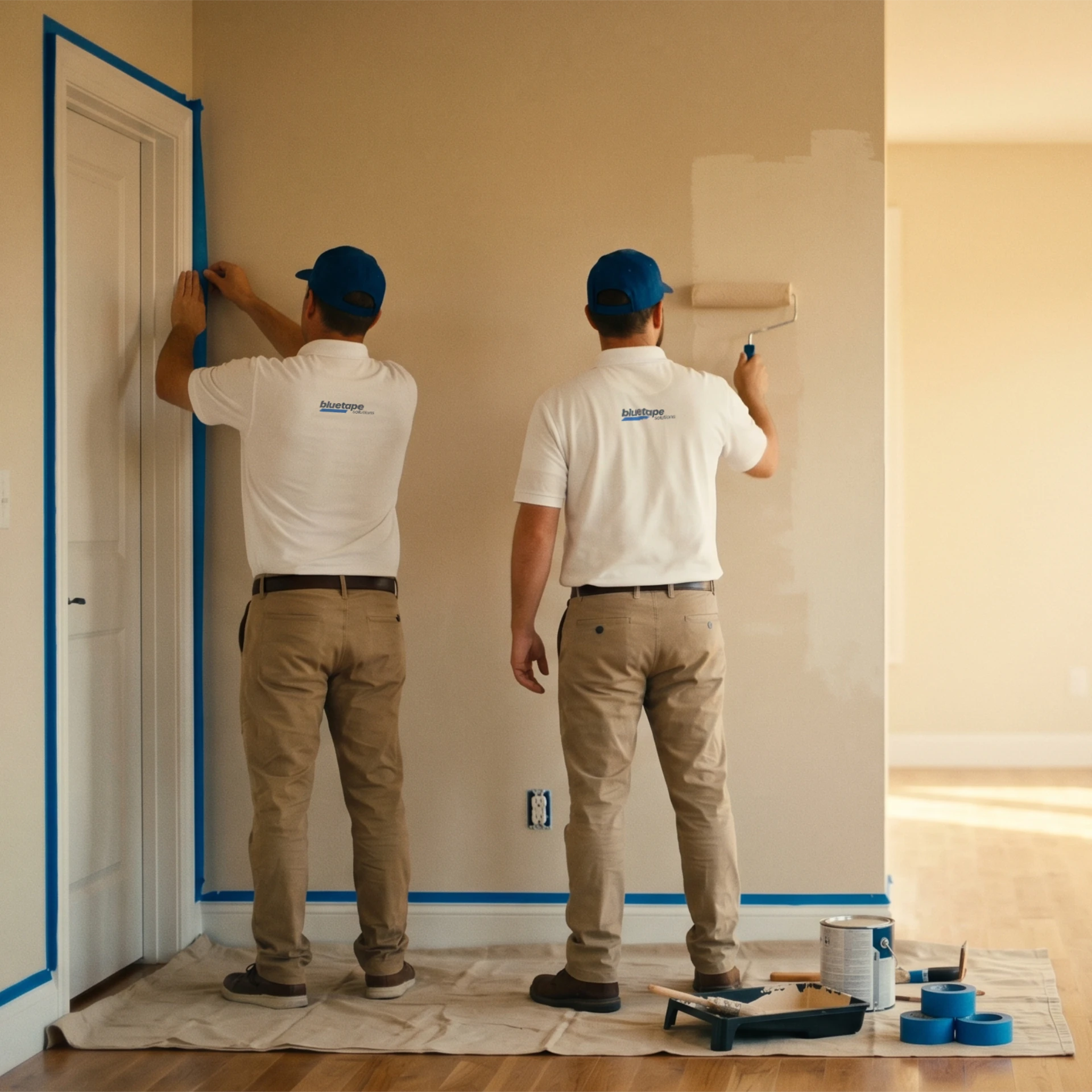
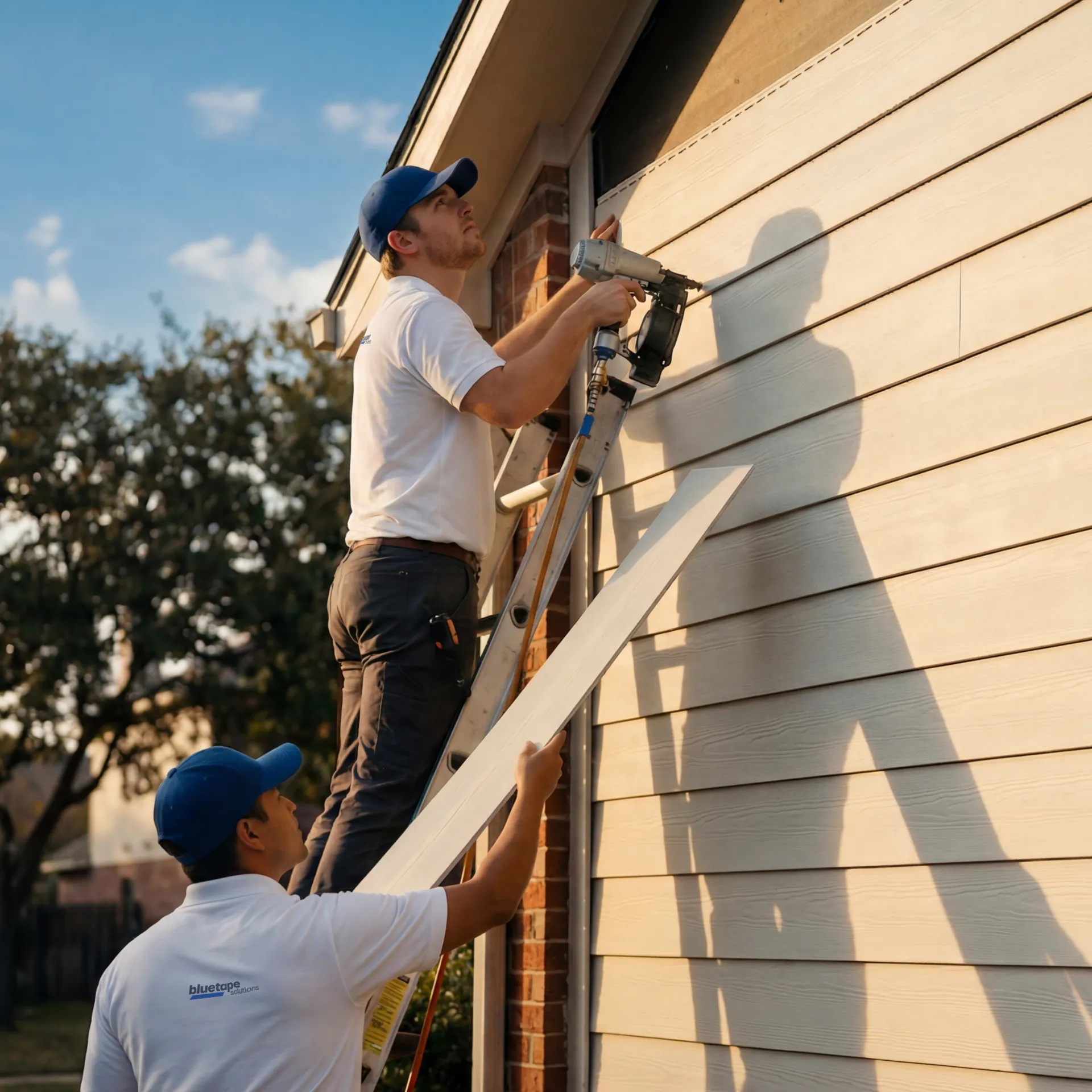
A real estate repair project may involve plumbing, electrical, carpentry, painting, roofing and handyman work. When those repairs are sourced separately, the homeowner can finish the project with several contractors, several invoices and potentially several different warranty policies.
With Bluetape, those trades are brought together within one coordinated project.
That means the accountability doesn't become fragmented after completion, either. Instead of determining which independent vendor performed a particular scope and what warranty that contractor offered, there is one repair company standing behind its workmanship.
For an agent introducing Bluetape to a client, that's part of the service experience: the repair relationship doesn't disappear when the invoice is paid.
Documentation, completion, and accountability
Real estate repairs often need to happen quickly, but speed shouldn't mean sacrificing what happens after the work is finished.
Bluetape's one-year workmanship warranty provides a defined period of accountability, while the Project Completion Report gives the client a lasting record of that coverage alongside the work that was performed.
It's one more part of a repair process designed to carry a project all the way through—not simply to completion, but to documented completion with a company willing to stand behind its work.